Enhancement of Albalat

Preserving the past to open the site to the future

An initiative to conserve, recover and disseminate the historical and cultural heritage of the territory. The project addresses three axes: physical protection, structure conservation, and the creation of visitor infrastructure.

An important part of the Albalat site enhancement project is the consolidation and restoration of the various remains and immovable heritage uncovered during archaeological campaigns. This work aims to consolidate building walls, protect them from external deterioration, and make them more legible, ensuring their preservation and facilitating future interpretation.

Work has also focused on the conservation of the most delicate slate slabs forming the floors of the site’s dwellings. Their consolidation protects one of the site’s most unique features: the graffiti found on some of these surfaces, among which engraved alquerque (board game) boards stand out as witnesses to everyday life at Albalat.

Project Objectives

Recover

Fence off to protect archaeological remains from uncontrolled access and looting, laying the groundwork for future enhancement actions.

Conserve

Conservation and rehabilitation of remains, with archaeological interventions in the intra-muros area and on the walls, specifically aimed at supporting enhancement.

Disseminate

Create a signposted route from the entrance to the interior, with informational stops and key points.

Planned Interventions

Secrets of the Albalat archaeological site

Excavations at Albalat are progressing with the discovery of wall structures and materials such as glazed ceramics, animal remains, and darts. These findings offer new clues about the life and destruction of the settlement.

The final stretch of its first phase

Excavations at the Albalat site are nearing completion of their first phase, focused on defining the streets that structured the settlement. This work will allow for a better understanding of its urban organization.

Success at the open house

On September 20th, Albalat held its open house, with over a hundred visitors in attendance. During the event, the public had the opportunity to learn about the progress, history, and unique features of the archaeological site.

Iron Scissors

The iron scissors found in Madinat al-Balat (Romangordo, Cáceres), before and after conservation and restoration treatment. The piece, dating from the 11th century, is one of the few examples of this type documented in Andalusian sites of the Middle March.

Planned actions

Fase 2024–2026

01

Perimeter protection fence:

SECURITY

Installation of a fence delimiting the site and preventing unauthorised access, looting and deterioration.

02

Consolidation of walls and structures

RESTORATION

Consolidation of walls and structures: Conservation-restoration work on curtain walls, towers and domestic structures.

03

Signposted visitor route

ACCESSIBILITY

Design and implementation of a signposted route with multilingual interpretive panels and accessibility for visitors with reduced mobility.

04

Centro de recepción de visitantes

Infraestructura

Setting up a welcome space with site information and display of selected materials.

04

Year-round public opening

TOurism

The ultimate goal is for the site to be open continuously throughout the year.

Replicas, artifacts and others

Fishhook replica

Fishhook recovered in Albalat along with its reproduction in epoxy resin.

Knife replica

The original specimen has a small reintegration in the handle.

Tiles with alquerque game

To create the replicas, flexible silicone molds were made from the original slabs, in which the alquerque boards were engraved.

Images and
recognitions

Most of the images published on this website were produced as part of the Madinat Albalat scientific and archaeological project. The authorship of the individuals and institutions that contributed to their creation is expressly acknowledged.

The use of these images for communication and dissemination of heritage purposes is authorized with indication of their origin.

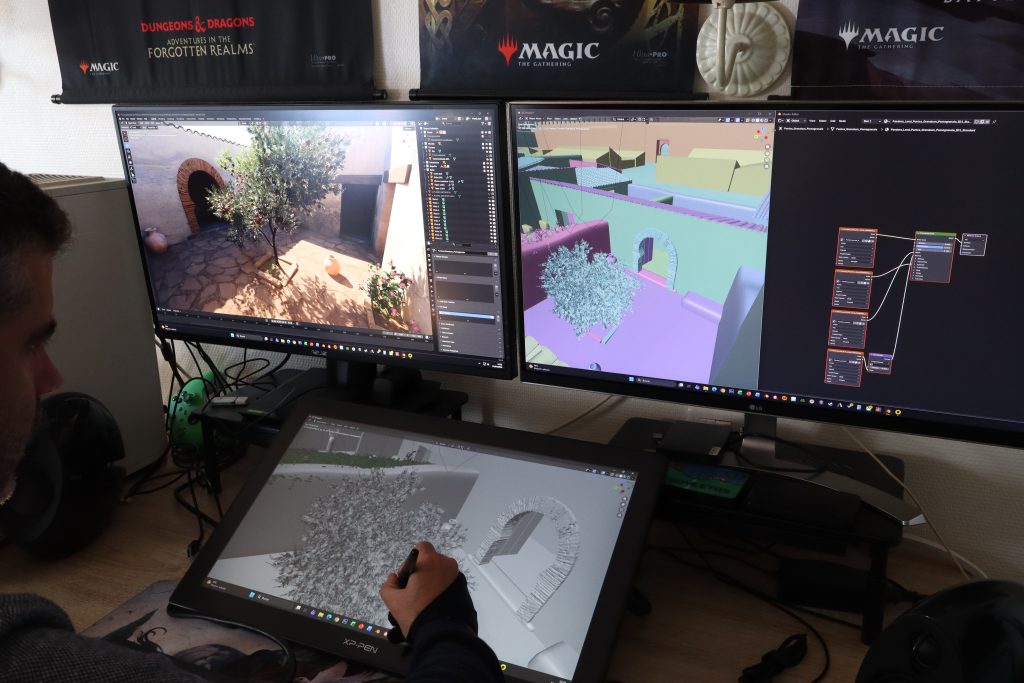
Albalat wishes to acknowledge and thank Francisco Gómez Cabeza for his work on the project to enhance the value of the archaeological remains through 3D reconstruction. His work is providing significant added value to the understanding and interpretation of the site.

"'Albalat, destroyed in 1142, was only very sporadically reoccupied, offering a unique snapshot of life on the frontier of al-Andalus."
Scroll to Top