Explore Romangordo
Romangordo is much more than it appears at first glance. Between its art-filled streets, privileged natural surroundings and fascinating past, this small village hides prehistoric caves, ancient fortresses, historic routes and interpretation centres that tell centuries of history. Every corner holds a surprise, making Romangordo a place where nature, heritage and tradition come together in perfect harmony.
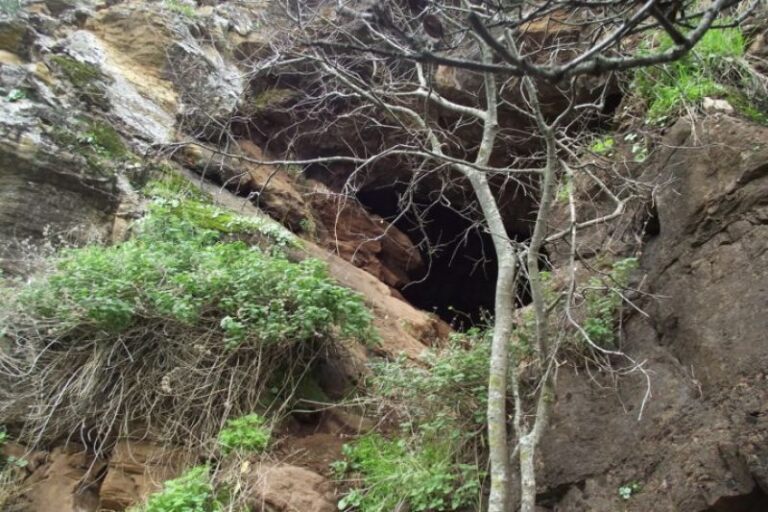
The Romangordo Cave: a prehistoric shelter
Its walls preserve human figures, suns and abstract marks made with natural pigments, dated to the Copper Age (over 4,000 years ago). This rocky shelter reveals the importance of the Tagus environment as a refuge and ritual site since ancient times, and today forms part of the rock art inventory of northern Extremadura.
Interpretation Centre of the Route of the English
Romangordo has a modern Interpretation Centre that explains one of the most remarkable episodes in local history: the crossing of General Hill's British army during the Peninsular War (1812). Through panels, audiovisuals and scale models, this space recreates how the soldiers crossed the Tagus and destroyed the Albalat bridge to halt the Napoleonic troops.
It is an essential visit to understand how Romangordo was the scene of a decisive battle for control of the central Iberian Peninsula. The signposted route starting from the village allows visitors to follow in the footsteps of those soldiers along the valley.
Explore tourism →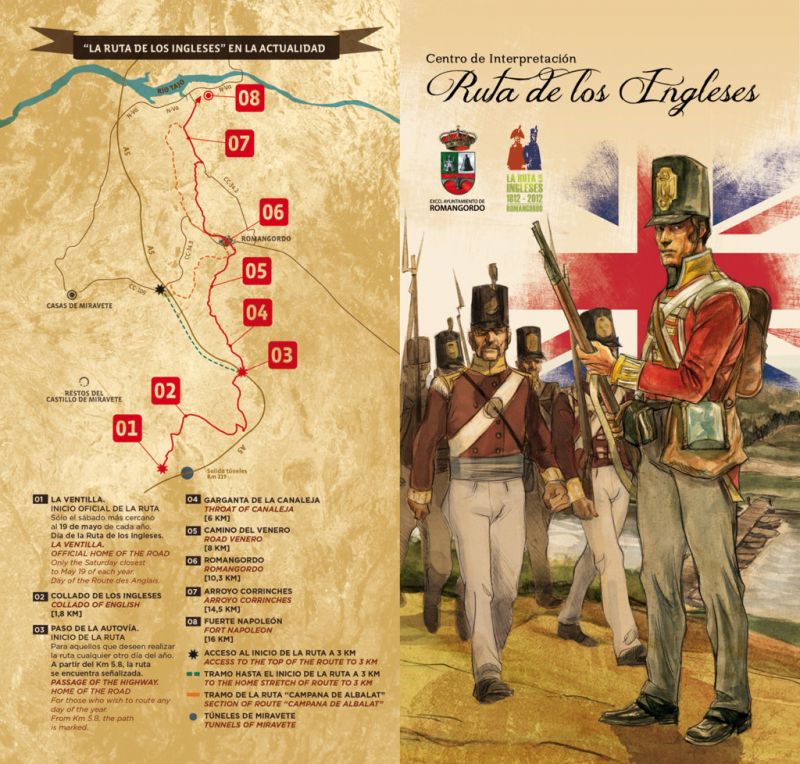
The ancient bridge and the historic roads of the Tagus
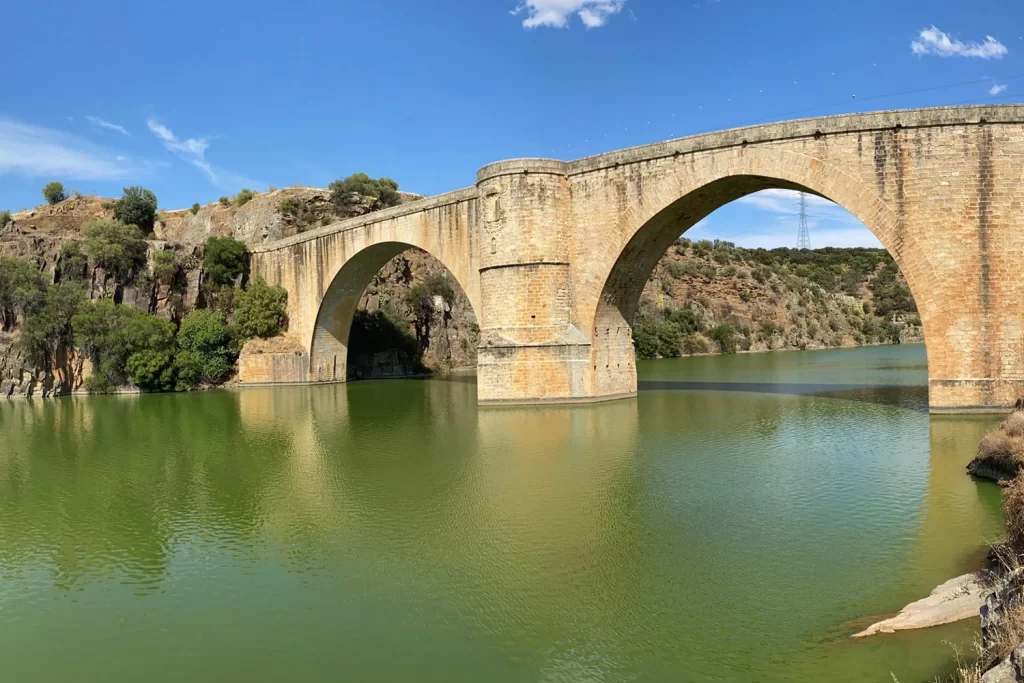
The monumental Albalat bridge, also known as the Almaraz bridge, was built during the reign of Emperor Charles V (16th c.). It is listed as a generic Asset of Cultural Interest (BIC) due to the presence of a coat of arms bearing the Emperor's double-headed eagle on its central pier.
It was partially destroyed during the Peninsular War (1808–1814) to halt the advance of French troops. Today it is in good condition and open to traffic, integrated into the N-5 national road. It is a powerful tourist attraction from which visitors can enjoy the natural, ornithological and historical heritage of the area.
Discover Romangordo tourism →